
The Future Of Digital Dentistry With Advanced 3D Printing

The dental industry is rapidly embracing smarter, faster, and more personalized solutions, making The Future Of Digital Dentistry With Advanced 3D Printing more exciting and promising than ever. As digital technology continues to evolve, modern 3D printing is helping dental professionals improve workflows, create customized solutions, and explore new possibilities in dental care. Dentists and dental labs can now use digital scans, CAD software, advanced materials, and 3D printers to create dental products with greater workflow efficiency. As technology develops, the focus is shifting from isolated machines to connected systems that support design, printing, post-processing, and production from start to finish.
How Digital Dentistry Is Changing Modern Dental Workflows
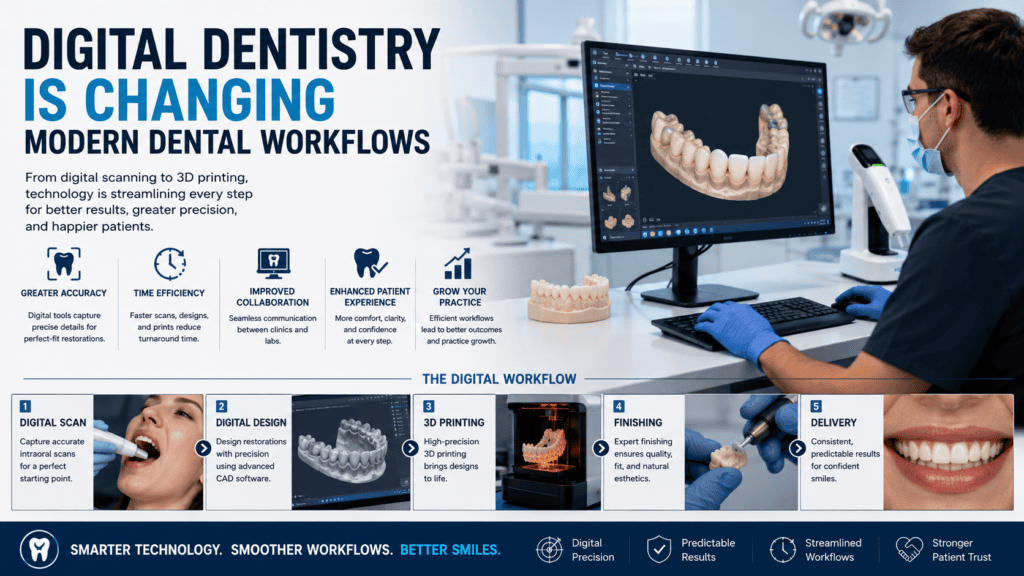
Digital dentistry has changed the way many dental professionals approach treatment planning and production. Instead of depending entirely on traditional manual processes, dental teams can move digital files through different stages of the workflow.
A typical digital process may include scanning a patient’s teeth, creating a digital model, designing the required dental appliance, preparing the print, and producing the final result. This digital approach can help reduce repetitive manual work and make information easier to manage across a dental team.
For dental labs, digital workflows can also make it easier to handle multiple cases. HeyGears highlights a broad range of dental applications across areas such as fixed restorations, removable restorations, implants, and orthodontics, showing how 3D printing continues to expand beyond simple prototypes.
The Growing Role Of 3D Printing In Digital Dentistry
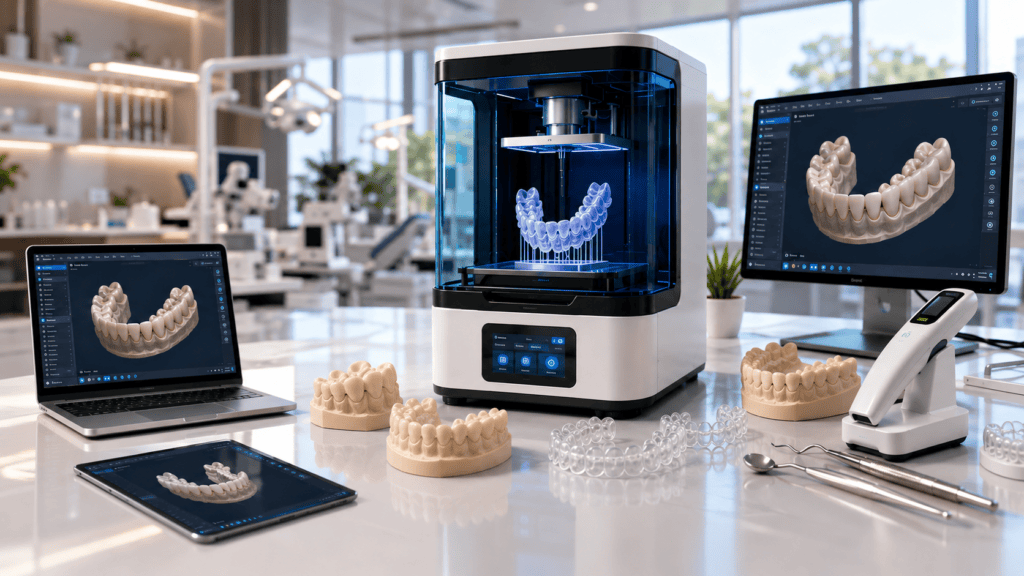
3D printing has become an important part of modern digital dentistry because it allows digital designs to become physical products without relying on every step of traditional manual manufacturing.
Dental professionals can use 3D printing for applications such as:
- Dental models
- Surgical guides
- Orthodontic applications
- Denture-related workflows
- Restorative applications
- Custom dental components
The main advantage comes from connecting digital design with physical production. Once a digital file meets the required specifications, the printing process can produce a customized item based on that design.
This approach also supports repeatability. A dental lab can work from standardized digital files and established printing parameters instead of rebuilding the process from scratch for every case.
Full-Color Printing Opens New Creative Possibilities
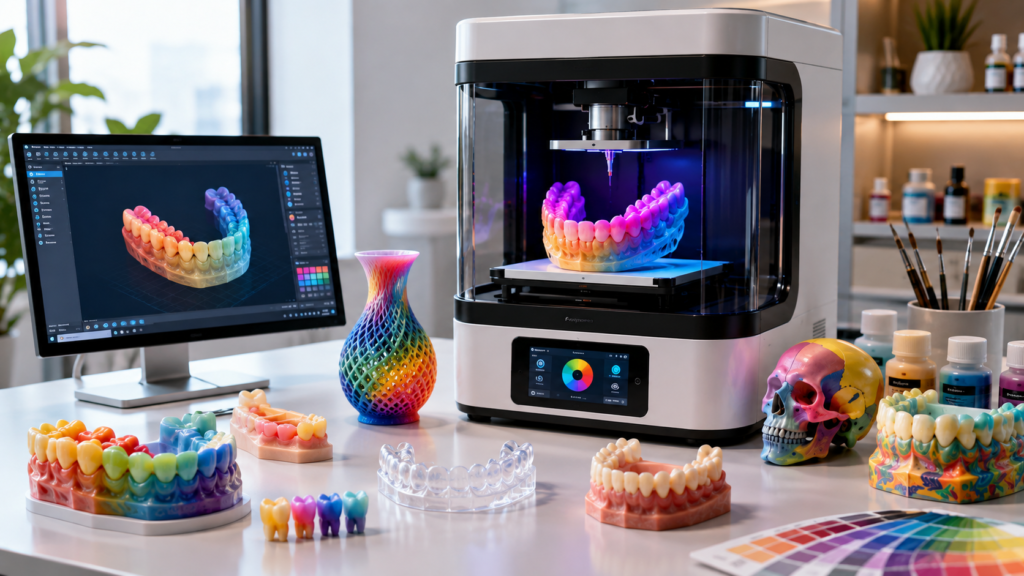
Although dentistry remains a major area for professional 3D printing, full-color printing is creating new possibilities across the wider 3D-printing industry. Newer systems can combine 3D printing and color workflows, helping creators produce detailed models without relying on as much manual finishing.
HeyGears’ G1X, for example, combines full-color 3D printing and UV printing in a desktop system. The company says the system supports millions of colors, 3D textures, and different printing modes, showing how modern printers are moving toward multifunctional production rather than single-purpose output.
For dental professionals, color can also support visual communication and education. For other industries, full-color output can benefit product visualization, collectibles, design models, and customized products.
Automation Can Make Dental Production More Efficient
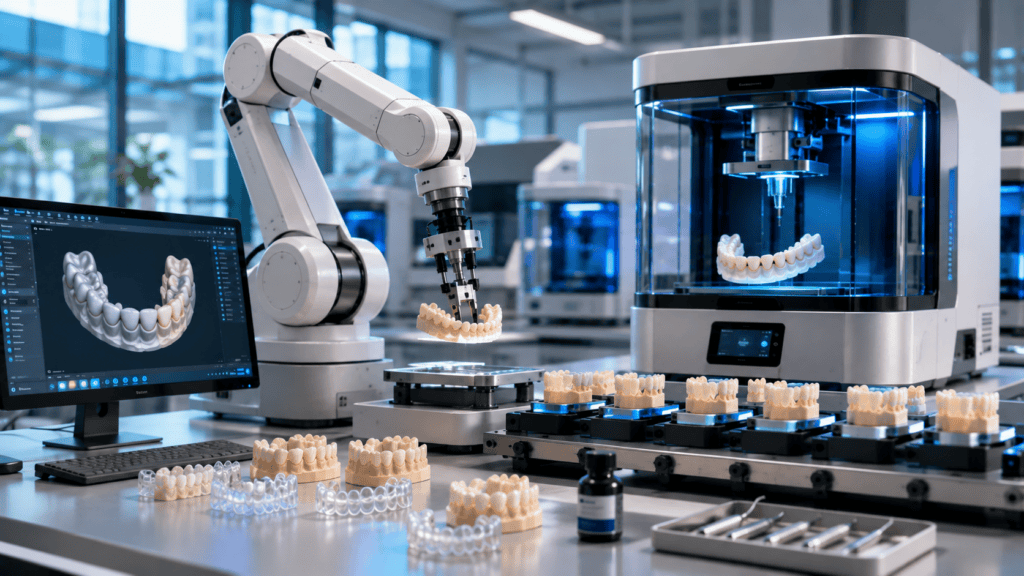
One of the most important developments in advanced 3D printing involves automation. Dental labs often manage large numbers of cases, so reducing repetitive manual tasks can make a meaningful difference.
Modern automated systems may help with tasks such as:
- Material refilling
- Part removal
- Production monitoring
- Workflow management
- Remote operation
- Batch production
HeyGears describes automated production solutions for dental applications and offers systems designed to support larger-scale workflows. Its UltraCraft A3D, for example, includes automated resin refill and automated part removal, while its A2D 4K supports remote automation and production-focused workflows.
Automation does not remove the need for skilled dental professionals. Instead, it can help teams spend less time on repetitive operational tasks and more time on quality control, case planning, and patient-focused work.
Production Is Moving Beyond Prototypes
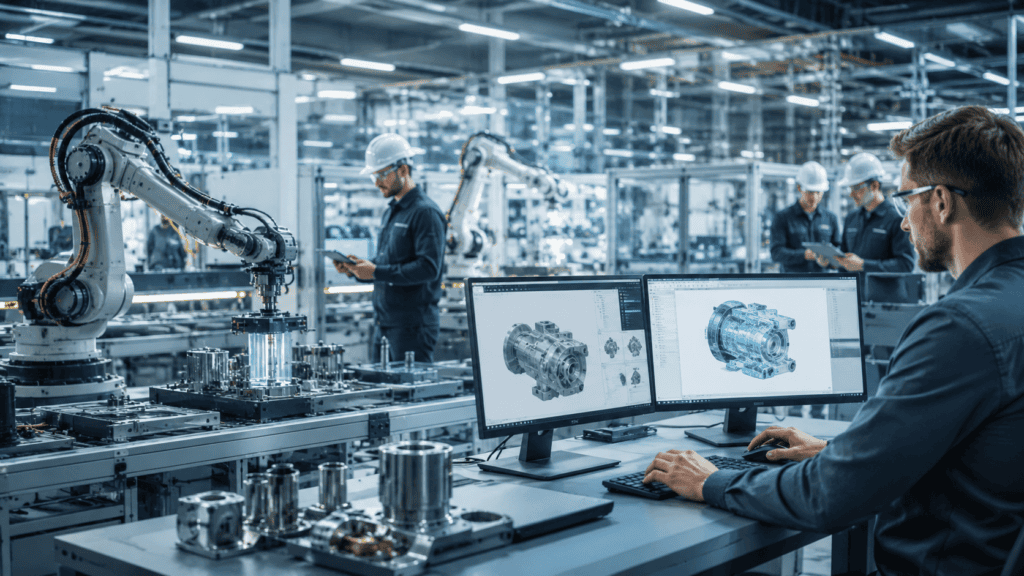
In the early days of many 3D-printing workflows, people mainly viewed the technology as a tool for creating prototypes. Today, production has become a much bigger part of the conversation.
Advanced 3D printers can support workflows designed for repeated output, which matters greatly for dental labs that handle consistent volumes of cases. HeyGears positions products such as the UltraCraft A2D and A2D 4K for dental production, while its A3D platform focuses on scalable automation and high-volume workflows.
The move toward production-ready systems could help businesses improve consistency and manage growing demand. However, every dental lab still needs to validate materials, processes, software, and final products according to its own clinical and regulatory requirements.
How Automation & Production Work Together
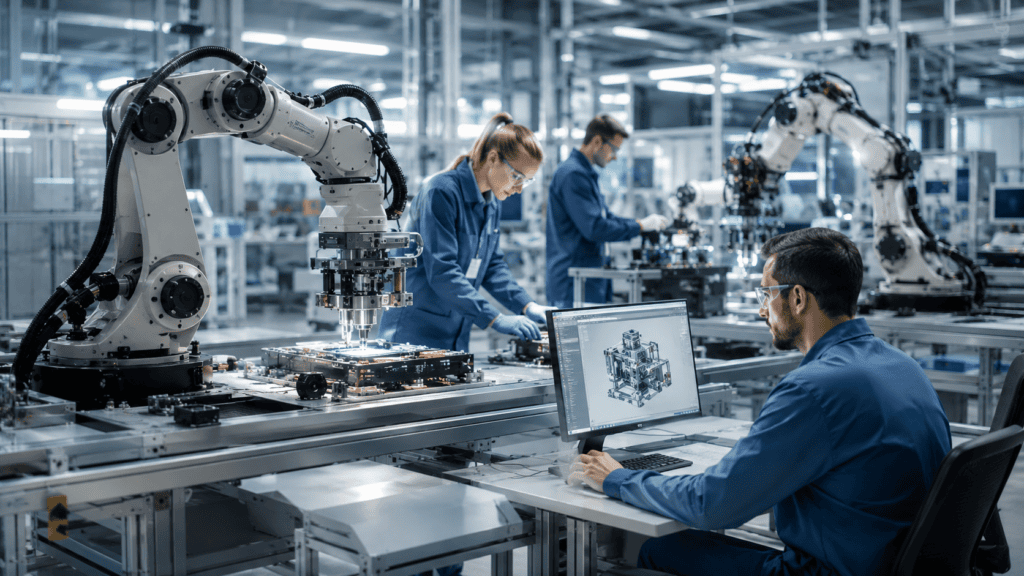
The real advantage appears when automation and production work together as part of one connected workflow.
Imagine a dental lab that receives multiple digital cases throughout the day. Instead of manually managing every stage, a connected system can help organize production tasks, monitor equipment, and reduce interruptions.
This approach can improve:
- Workflow consistency
- Production planning
- Time management
- Capacity management
- Staff productivity
HeyGears has also described connected workflows that combine hardware, software, materials, and automated systems. These developments reflect a wider shift toward complete digital ecosystems rather than standalone 3D printers.
Digital Dentistry & Faster Customization
One of the biggest strengths of digital dentistry lies in customization. Every patient has different dental needs, so a one-size-fits-all approach does not always work.
Digital workflows allow professionals to design products around individual cases. This can support personalized treatment planning and more efficient manufacturing.
HeyGears has also highlighted digital workflows for denture applications, including a one-piece denture solution that uses dual-material DLP 3D printing to combine denture base and teeth materials in one printing process. Such developments show how 3D printing continues to explore new approaches to customized dental production.
Small-Business Opportunities In 3D Printing
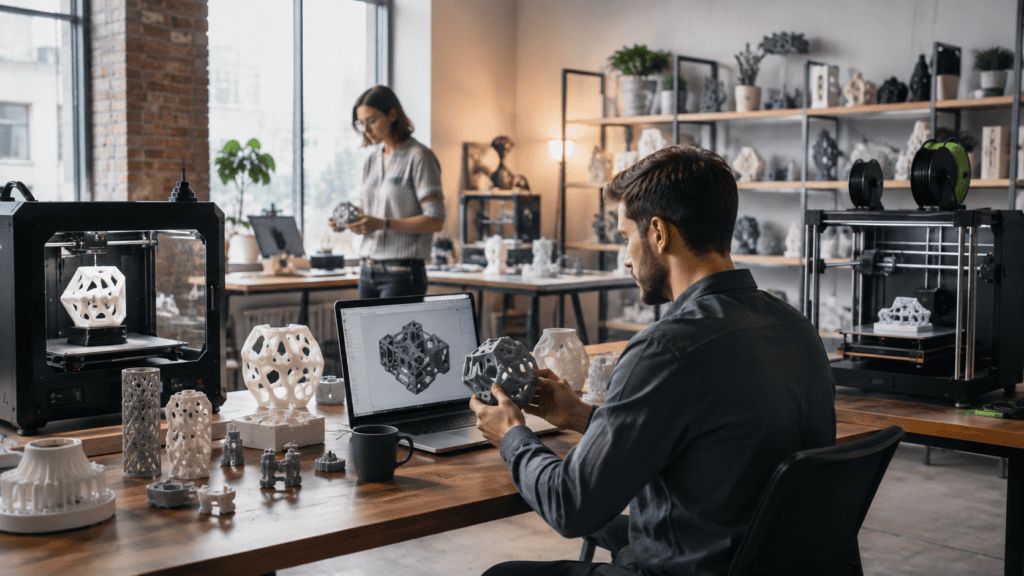
The growth of advanced 3D printing also creates new small-business opportunities. Entrepreneurs can explore areas such as:
- Custom product manufacturing
- Dental laboratory services
- Miniature and collectible production
- Prototype development
- Personalized accessories
- Small-batch manufacturing
- Full-color model production
The exact business opportunity depends on local demand, equipment costs, materials, skills, and applicable regulations. Still, easier access to modern desktop and production systems gives smaller teams more options than they had in the past.
HeyGears has recently promoted its G1X as a tool for small businesses and creators, while its broader product ecosystem covers applications ranging from prototypes to production.
3D Printing: Dentistry, Automation, Production, And Business
The combination of full-color printing, digital dentistry, automation, production, aur small-business opportunities shows how quickly 3D printing continues to evolve.
These areas may look separate at first, but they share a common direction: digital workflows that make customization, repeatable production, and efficient manufacturing more accessible.
For dental labs, automation and digital production can help manage growing workloads. For creators and entrepreneurs, full-color printing and desktop systems can open new product ideas. For manufacturers, advanced 3D printing can support more flexible production models.
The technology still requires careful planning and professional knowledge, but the possibilities continue to expand.
Discover More Technology And Innovation
Technology changes quickly, and staying informed can help businesses and consumers make better decisions. trustedbrands is a useful place to explore more insights about technology, digital innovation, modern products, and emerging trends.
Whether you follow developments in 3D printing, digital dentistry, automation, or small-business technology, keeping up with new tools can help you understand where different industries are heading.
What The Future May Look Like
The future of digital dentistry and 3D printing will likely focus on smarter, more efficient workflows rather than simply developing faster machines. Better software integration, automated production, improved materials, and more connected systems could make advanced manufacturing easier to manage.
In dentistry, this may mean more streamlined digital workflows from scanning and design to printing and post-processing. In other industries, it could mean more personalized products and greater access to small-batch manufacturing.
The key trend is flexibility. Businesses want tools that can adapt to different products, materials, and production demands. As 3D printing technology continues to mature, the companies that connect hardware, software, materials, and automation may have the strongest impact.
Final Thoughts
The Future Of Digital Dentistry With Advanced 3D Printing is not simply about replacing traditional tools with new machines. It is about creating connected workflows that help professionals design, customize, produce, and manage products more efficiently.
From digital dentistry and automated dental production to full-color printing and new small-business opportunities, 3D printing continues to influence industries in different ways. The technology still requires expertise, quality control, and responsible implementation, but its potential remains significant.
As digital tools become more accessible and production systems become smarter, advanced 3D printing could play an even larger role in the future of dentistry, manufacturing, creative work, and personalized products.
FAQs
1. What is digital dentistry?
Digital dentistry combines technologies like digital scanners, CAD/CAM software, and 3D printing to streamline dental design, treatment planning, and production processes.
2. How does 3D printing help digital dentistry?
3D printing can turn digital designs into physical dental products and models. It can support customized workflows and help dental labs manage different applications.
3. What is full-color printing?
Full-color printing uses specialized printing technology to create objects with detailed colors and visual effects. New systems can combine 3D printing with color and UV printing capabilities.
4. How does automation help 3D printing?
Automation helps minimize repetitive tasks, including material refilling, part removal, and monitoring the production process. This may help businesses manage production more efficiently.
5. Can small businesses benefit from 3D printing?
Yes. 3D printing can create opportunities in custom products, prototyping, collectibles, personalized goods, and small-batch manufacturing. Success depends on demand, costs, skills, and the business model.
6. Is 3D printing replacing traditional dentistry?
Not completely. 3D printing works as one part of a broader dental workflow.Dental professionals must still rely on sound clinical judgment, maintain strict quality control, use approved materials, and follow all relevant regulations.
7. What is the future of digital dentistry?
The future will likely involve more integrated digital workflows, automation, advanced materials, and production systems that help dental professionals handle customized cases more efficiently.